Micro-Breaks for Therapists
A micro-break is a pause of 10 minutes or less. A 2022 meta-analysis in PLOS ONE found micro-breaks were linked to more vigor and less fatigue. They didn’t improve task performance overall, though longer breaks were linked to better performance on some tasks. For a therapist on a back-to-back schedule, that’s the realistic promise: you may feel better at 3 PM, not see more patients.
By the Best Therapy Productivity Calculator team · Last updated October 2026
What did the research find?
| Finding | |
|---|---|
| Study | Albulescu and colleagues, PLOS ONE, August 2022 |
| What was combined | 22 studies from 19 papers |
| Micro-break definition | Stopping a task for 10 minutes or less |
| Energy (vigor) | Higher after micro-breaks |
| Fatigue | Lower after micro-breaks |
| Performance | No overall improvement; longer breaks linked to better performance, more so for clerical or creative tasks |
The studies weren’t done with therapists, so treat this as general evidence about short breaks at work.
Are short breaks paid?
Under the federal Fair Labor Standards Act, short breaks of about 5 to 20 minutes are generally paid work time. Paid breaks stay in your paid minutes, so they count toward the bottom of your productivity fraction. A 5-minute break once in the morning and once in the afternoon is 10 minutes, about 2% of an 8-hour day.
How can you fit micro-breaks into a therapy day?
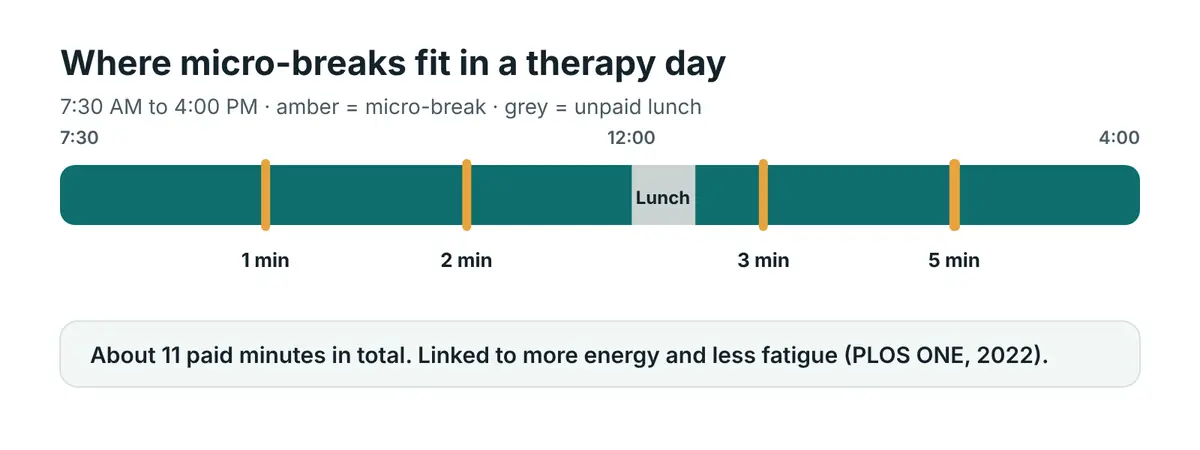
You don’t need a separate break. Short pauses can attach to things you already do.
| When | Micro-break idea | Time |
|---|---|---|
| After walking a patient back | 5 slow breaths before the next chart | 1 min |
| Between gym sessions | Refill water, stretch your wrists and back | 2 min |
| After a hard session | Step outside or to a window | 3–5 min |
| Mid-afternoon slump | Short walk to another floor | 5 min |
What makes a micro-break work?
- Actually stop. Scrolling email isn’t a break.
- Move, if you sit; rest, if you lift. Match the break to the work you just did.
- Keep it short. The point is to come back.
- Plan it in. If you wait until you feel exhausted, the break never comes.
Frequently asked questions
How long is a micro-break?
In the 2022 meta-analysis, 10 minutes or less.
Will micro-breaks hurt my productivity number?
Paid breaks are part of paid time. A few minutes a day is a small share, and they may help you work better later in the day.
Do micro-breaks prevent burnout?
The research looked at short-term energy and fatigue, not burnout. They may help, but they’re not a fix for an unmanageable caseload.
Related: Energy-based scheduling · Between-session transition routine · Productivity calculator with lunch break
General information. Not medical advice.
Sources
- Albulescu P, Macsinga I, Rusu A, Sulea C, Bodnaru A, Tulbure BT. “Give me a break!” A systematic review and meta-analysis on the efficacy of micro-breaks for increasing well-being and performance. PLOS ONE. 2022;17(8):e0272460
- U.S. Department of Labor, Breaks and Meal Periods