
A 20-Minute Weekly Review for Therapists
A weekly review is a short, regular check-in with your own caseload: what happened, what’s due and what next week needs. Twenty minutes on Friday can save you a missed progress report, a surprise in your productivity report or a Monday spent catching up.
By the Best Therapy Productivity Calculator team · Last updated October 2026
The 20-minute checklist
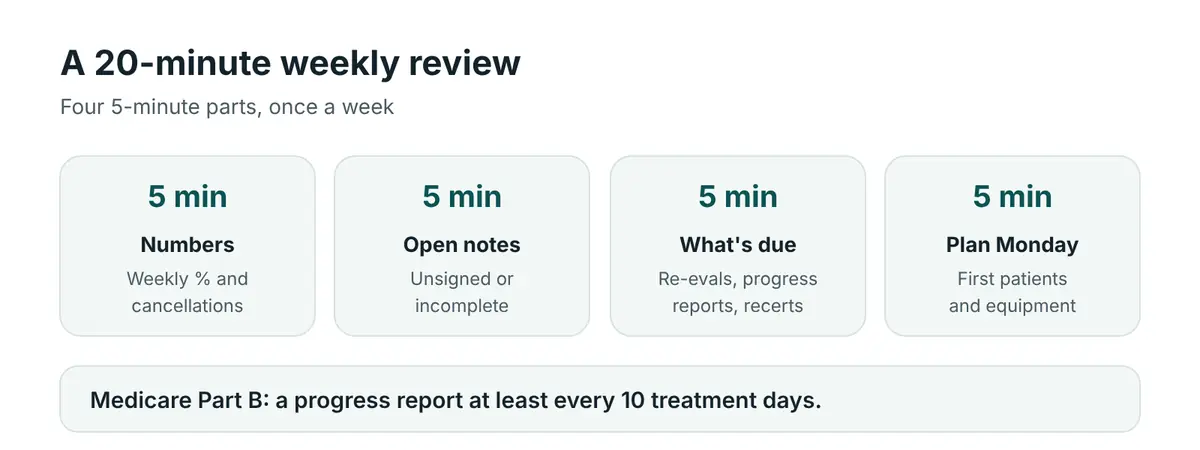
| Minutes | Part | What to check |
|---|---|---|
| 5 | Numbers | Weekly productivity in the weekly calculator; cancellations; any day far off target and why |
| 5 | Open notes | Any unsigned or incomplete notes; co-signatures needed |
| 5 | What’s due | Progress reports, re-evaluations, plan-of-care recertifications, discharge summaries, authorization end dates |
| 5 | Plan Monday | First patients, equipment, anything to raise with your manager or scheduler |
Why track what’s due?
Payers set deadlines. For Medicare Part B outpatient therapy, for example, a progress report is required at least once every 10 treatment days, and the plan of care must be certified by a physician or other allowed practitioner. Missing these can mean denied visits. Your setting and payers may have other rules, so build your own list.
What should you do with the numbers?
Look for patterns, not one bad day.
| Pattern | Possible cause | Next step |
|---|---|---|
| Low every Monday | Monday cancellations | Ask about Monday reminders or a waitlist |
| Low on eval days | Heavy write-ups | Ask for a protected notes block (see caseload mix) |
| On target but staying late | Notes off the clock | Look at time blocking |
Frequently asked questions
When is the best time for a weekly review?
Whenever you’ll actually do it. Friday afternoon or Monday morning are common.
Should the weekly review be on the clock?
Yes. It’s work. If your employer doesn’t give you time, fold parts of it into your daily notes blocks.
What if I work per diem in several places?
Keep one list across all sites so due dates don’t fall through the cracks.
Related: Weekly therapy productivity calculator · Time blocking · Body doubling
Sources
- CMS, Medicare Benefit Policy Manual, Chapter 15, §220.3 (therapy documentation, progress reports)